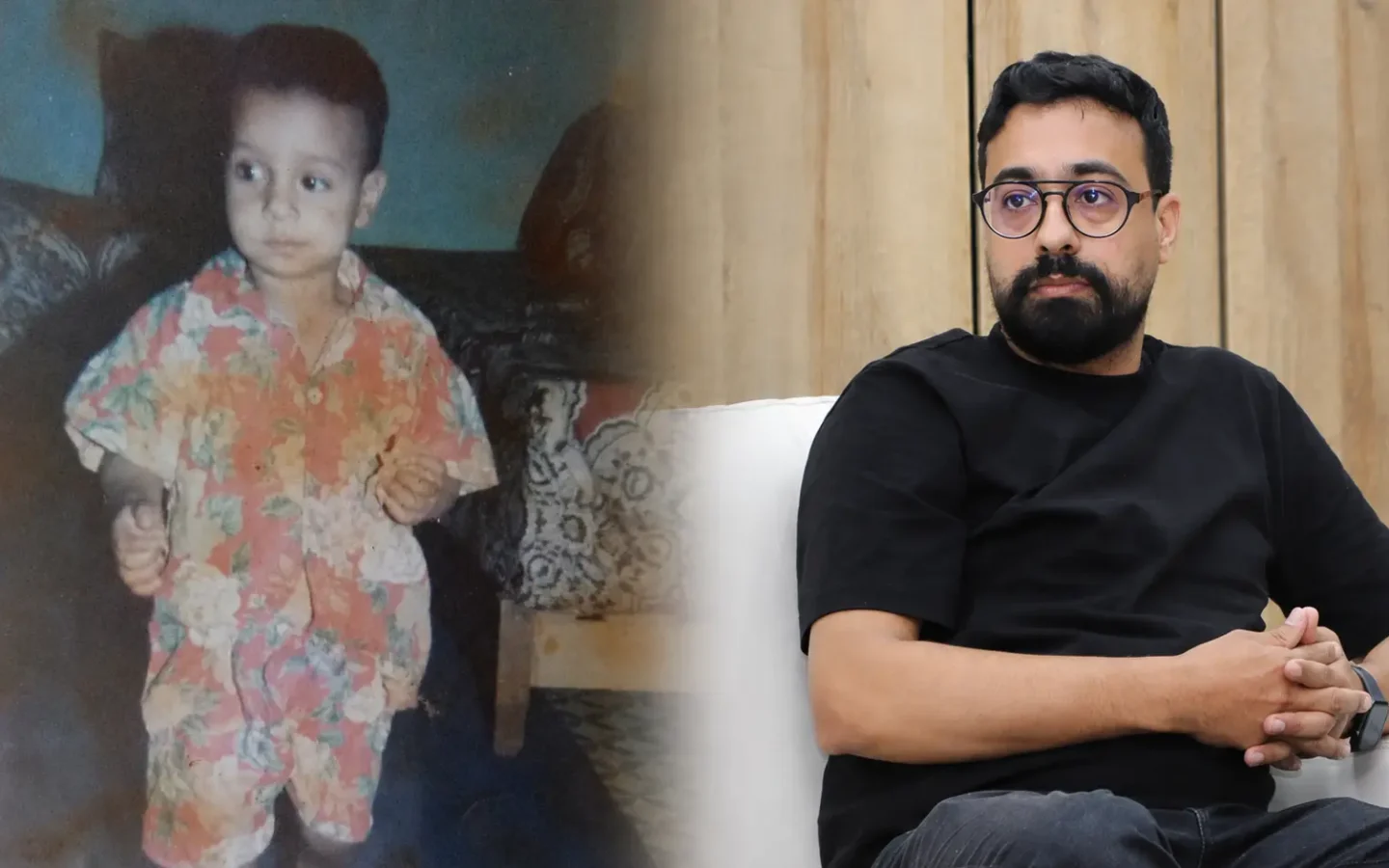
My grandfather, may he rest in peace, was called Abdellah. He used to hide his money in a small leather pouch, almost like a tiny bag, attached to the belt under his djellaba. Before leaving the house every day, he would tap his side twice with his hand just to make sure the money was still there.
I remember that scene almost every time my phone unlocks when I bring my face close to the camera. He did not trust banks. Today, I no longer fully trust my phone.
When I was a child, I loved sitting with my grandfather and his friends. Most of them today are only memories their grandchildren still carry. One afternoon, they were talking about the old days, and one of them said something that stayed in my mind: “We are the last generation that will remember the war.”
I thought about that sentence again recently when I was sitting with some friends, most of us born in the 1980s. We almost agreed on the same feeling: maybe we are the last generation that experienced life in a normal way before the internet, before social media, and before artificial intelligence.
I grew up in a neighbourhood where I knew more than twenty families. I knew their names. I knew who had enough food for dinner and who was struggling, who was sick, who was travelling, and who was going through a difficult time.
The door of our house was rarely closed. There were always guests, neighbours, relatives, and people from the family I had never met before and sometimes had never even heard about. But they were coming in and out as if the house was theirs too.
Today, you will almost never find the door of my house open. I do not even know the name of the neighbour living next to me, even though his door is directly in front of mine. The only thing between us is a quick hello when we meet near the elevator.
My life moved from trusting an entire neighbourhood to being suspicious of an entire world.
Maybe that is why I feel we are the last generation.
We also knew how to wait. We waited for cartoons at 5:30 in the afternoon and lived every adventure with them on a black-and-white television. Later, we grew up and started waiting at the cybercafé, collecting dirham after dirham to experience this strange new world called the internet.
Then came the time when we waited until after midnight because SMS messages became free. We chatted with numbers we knew and numbers we did not know. Sometimes you had to go up to the roof just to send one message because it felt like the whole of Morocco was trying to send messages at the same time.
Patience was not a virtue back then. It was simply the normal speed of life.
Then, at some point, the world started running. I do not think any of us really understood exactly when it happened. Speed slowly became the normal way of living.
We moved from living with calm and some kind of peace to constantly trying to catch up with everything changing around us. Every time you blink, something has changed. We became numbers, accounts, passwords, profiles, data.
We went from my grandfather’s leather money pouch to Face ID.
We were told that technology would make life easier, and in many ways it did. But somewhere along the way, we also became dependent on it in ways we did not fully expect. Many of us believed in this new world completely, and some of us even helped build it.
That is what makes our generation strange. We did not only watch this transformation. We took part in creating it.
We moved from writing with a blue or black Bic pen to writing without pens at all. From family photo albums that everyone gathered around during special occasions, laughing and sometimes crying while remembering old stories, to thousands of photos stored inside phones that we almost never look at again.
We take more photos now. We write more. We read more. We consume more information than any generation before us.
But we remember less.
There is always another scroll, another video, another post, another notification. At the end of the day, you can spend hours consuming things and still feel like you did nothing with them.
Maybe we are not the best generation. Maybe the old days were not better in everything. Life was harder in many ways. Information was difficult to find. Opportunities were fewer. Communication was slower.
But we lived something that the generations after us will never experience in the same way.
We knew what life felt like before everything passed through a screen.
We remember waiting without feeling that something was wrong. We remember getting lost because there was no Google Maps. We remember calling a home phone and not knowing who would answer. We remember taking a photo without seeing it immediately. We remember meeting people without checking their profile first.
And now, at the same time, we are living through artificial intelligence, algorithms, Face ID, instant information, and a world where almost everything can happen from a device inside your pocket.
We are a generation that remembers the past while already living in the future.
Maybe that is why I keep thinking about my grandfather and that small pouch under his djellaba.
He used to tap it twice before leaving the house to make sure his money was still there.
Today, I look at my phone, it recognises my face, and it opens an entire world in front of me.
Between his pouch and my Face ID, there is not only a difference in technology.
There is an entire world that disappeared, and another one that arrived so quickly that we are still trying to understand what happened.
Maybe that is why I feel we are the last generation.