In a meeting a few weeks ago, a colleague came to me excited, like he had found a secret that would change the world.
“Fouad, did you see? I wrote three articles in one hour using AI.”
I said: “Great. And the results?”
He stopped for a second. Then he said, with less energy in his voice: “Honestly, nobody engaged with them.”
I was not surprised.
I hear this story a lot lately. People producing more, writing faster, designing in minutes, coming out with dozens of ideas in record time. But the impact stays weak. The content is there. The words are in order. The images look good. The plan looks complete. And still, nothing happens.
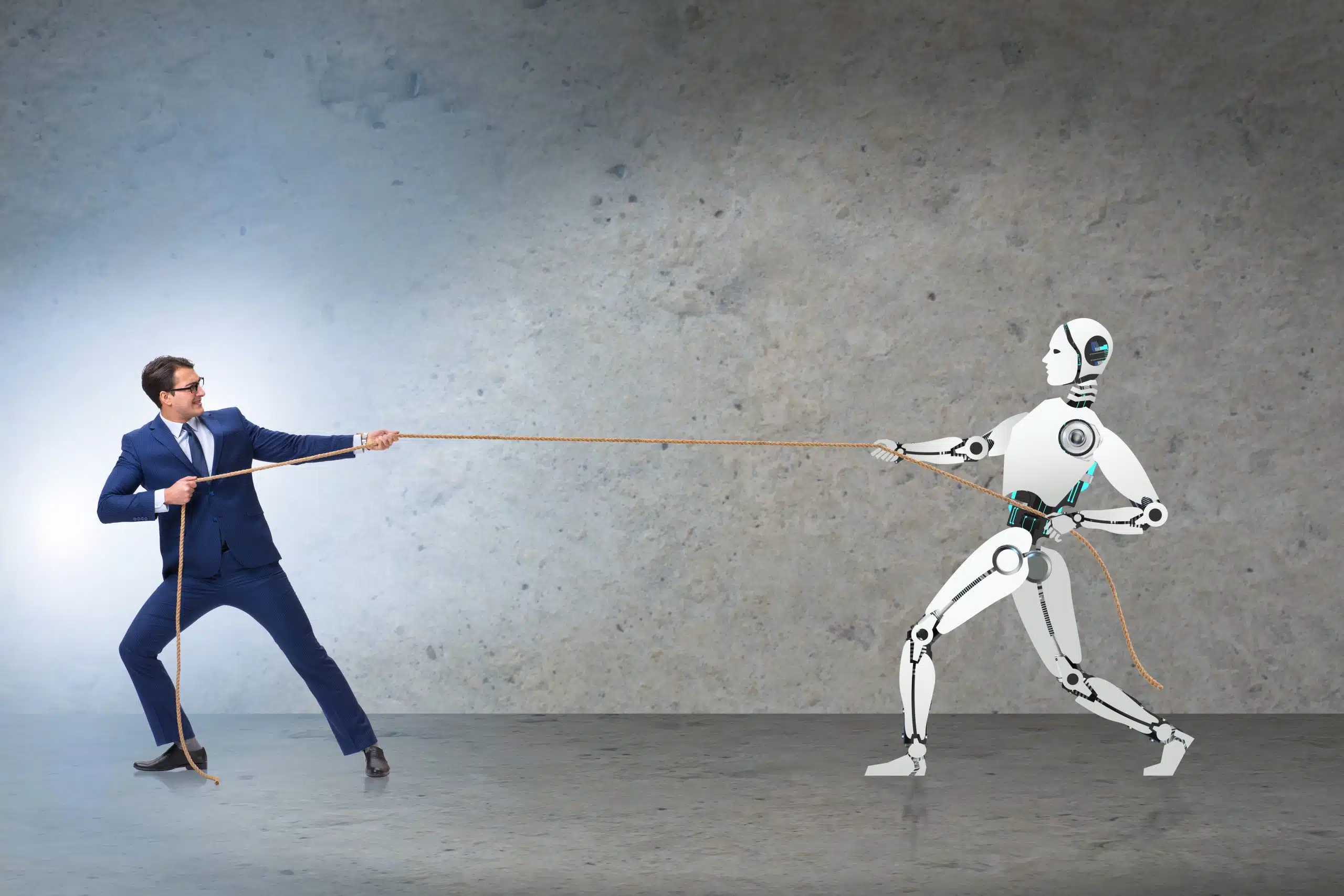
That moment made something clear to me. The problem is not AI, and it is not the tools we use. The problem is that we started to confuse production with impact. Speed with value. Making something with making someone feel something.
The machine can execute, suggest, organize, summarize, and produce at a speed no human can match. But it does not know on its own why this thing should be said, who it is for, and what it is supposed to change. That job is still ours.
When everyone has the same tools
A few years ago, if you wanted a professional design, you needed a designer with experience, a trained eye, and tools that not everyone knew how to use. If you wanted good marketing copy, you needed a writer who understood the market and the audience, and knew how to pick the word that lands at the right moment.
Today everything changed.
Anyone can open a tool like Midjourney and get a beautiful image in minutes. Anyone can ask ChatGPT for ten versions of an ad, an article, or an email in seconds. Even strategies, content plans, sales decks, and campaign ideas now have ready templates you can copy and reuse.
Almost everyone has the same weapons now.
And here the real question starts: if everyone has the same tools, what will make you different?
The answer is simple and uncomfortable at the same time. You.
Not the software you use. Not the number of prompts you memorized. Not how fast you produce. What will make you different is the way you think, what you understand about people, how you read context, and why you choose one direction over another.
That is when I started noticing something. The skills we used to treat as normal, or old, are now the real difference. Skills we stopped paying attention to because we were busy being impressed by new tools. And they might be the last thing a machine cannot fully give us.
Knowing how to talk to people
A few months ago, I was reviewing an ad campaign written by AI. Language-wise, there was no clear mistake. The sentences were in order, the words were correct, the message looked clear. But when I read it, I felt nothing.
The text was talking to people, but it did not understand them.
That is a big difference.
AI knows patterns. It can rebuild the words that worked in thousands of texts before. But it does not always understand that a Moroccan audience can be pushed away by too much formal language, and that one word in the right place can be stronger than a full paragraph. It does not feel that people are not buying “an excellent product,” they are looking for a solution to a problem that actually bothers them. And it does not know that a sentence that works with an audience in one country can sound cold or fake in another.
Real communication is not just moving information. It is knowing who is in front of you, what scares them, what makes them hesitate, and what they need to hear to feel that you are talking with them, not above them or about them.
This does not come from memorizing templates. It comes from being around people, from listening, from making mistakes, and from being actually present when the other person talks.
Reading what is not said
I remember a meeting with a potential partner. He kept saying: “The idea is excellent, and I am very excited.”
All the words were positive. But his tone was not. He avoided direct eye contact, and he hesitated every time we reached the next step. Everything in his words said yes. Everything in his presence said no.
I did not need a report, or a dashboard, or advanced analysis. I only needed to pay attention.
This is one of the skills I learned from journalism. In interviews, the truth is not always in what the person says. Sometimes it is in what he is trying not to say. In the silence before the answer. In the word he changes at the last second. In the subject he keeps circling around so he does not have to get close to it.
AI can analyze words, and today it can probably analyze tone and facial expressions too. But it does not live the tension in the room. It does not know the history between the people sitting there. And it does not always understand why this person chose silence in that exact moment.
Reading what is not said is not a technical skill. It is a mix of experience, attention, instinct, and understanding people in their real context.
Without it, we can build plans that look excellent on paper and fall apart the moment they meet reality.
Trusting your gut
Years ago, I worked on a campaign for a new app. We collected the numbers, studied the market, analyzed the competitors, and built a strategy that looked very logical.
Everything said we were going in the right direction.
But something inside me said the opposite.
I did not have a number to prove my feeling, and at first I could not explain exactly why I was not convinced. It was just a sense that we were answering a question the audience was not asking.
We decided to change direction.
The result was much better than we expected.
For a long time, I thought instinct was something vague, a kind of unscientific guessing. But I understood later that instinct is not always random. Sometimes it is experience that piled up in a place we cannot see clearly. Hundreds of situations, mistakes, conversations, results, and small observations turn over time into an ability to feel that something is right or wrong before we find a full explanation for it.
Instinct should not replace numbers. But it should not be killed in the name of numbers either.
The best decisions I have seen were not built on data alone, or on feeling alone. They came from a meeting between what the numbers say and what a person who knows the market from the inside feels.
Telling a story you actually lived
A few days ago, I read two articles on the same topic.
The first one was very organized. Clear intro, subheadings, examples, and a conclusion that summarized everything. There was no mistake in it. But it disappeared from my memory after a few minutes.
The second one was written by someone from his own experience. It was not perfect in its writing, and it had some flaws, but it carried a clear soul. I felt the person lived what he was writing, and paid the price of the lesson before turning it into words.
Guess which one stayed with me?
Real stories do not stay because they are perfectly written. They stay because they carry the mark of a life. There is a moment of fear in them, or a mistake, or a loss, or a decision that was not easy. And there are small details that cannot be invented easily, because they came out of a real experience.
When I write about marketing, I do not want to repeat theories that exist everywhere. I want to write about the campaign that failed, about the decision we took too late, and about the moment we discovered that the audience did not care about what we wanted to say, but about what they needed to hear.
AI can collect stories, rebuild them, and write a text that looks human. But it never lost a client. It never walked into a tense meeting. And it never went home reviewing every decision it made.
Experience is not information. Experience is a mark.
And that mark is what makes a story real.
The tools evolve, the responsibility stays with the human
I am not saying we should resist AI or go back. The opposite. I use it every day, and I see it as one of the strongest tools that appeared in our working life.
It helps me research, organize ideas, try different angles, and save a lot of time that used to go into repetitive work. And it will get stronger, faster, and more present in everything we do.
But the danger starts when we stop thinking because the tool thinks for us. When we stop understanding because the tool gives us a ready answer. And when we stop being around people because we have a lot of data about them.
The tool can help you write a message, but it will not carry the responsibility if the message is wrong. It can suggest a campaign, but it will not sit in front of the client if it fails. And it can give you ten ideas, but it will not choose for you the one that deserves to become a decision.
The responsibility stays with the human.
That means our value will not be in our ability to execute tasks, because execution became easier and faster. Our value will be in choosing the right task, asking the right question, understanding the context, making the decision, and giving the work a meaning the tool cannot produce alone.
The skills AI cannot replace
In the coming period, the person who stands out will not be the one who knows the most tools. That knowledge will become basic and available to everyone, like using email or a search engine.
The difference will be in things that look simple. Listening well. Understanding what drives people. Noticing hesitation. Asking a question nobody asked. Connecting events that seem far from each other. Telling a real experience. And having a clear position instead of collecting the opinions that already exist.
These are the forgotten skills.
They are not old skills. They are skills whose value arrived late, because we were living in a world that rewarded execution. Now that execution is available to everyone, the value goes back to the person who knows why he is executing, for whom, and in which direction.
AI will make you faster. But it will not automatically give you vision.
It will give you more words. But it will not guarantee you have something worth saying.
It will put powerful tools in your hands. But it will not answer for you the most important question: what will you do with them?
In a world where everyone owns the same machine, the difference will be how much human is left in you.